Three days of practical learning, professional development and shared experiences. Take a look inside the IMIS infant massage instructor course held in Brisbane from 16-18 October 2026.
What does it actually involve to become a qualified infant massage instructor?
For many people considering training, it's easy to picture learning massage techniques. What may be less obvious is how the course brings together practical massage skills with an understanding of infant cues, development and parent-infant interaction, all explored specifically within the context of infant massage.
Whether students are building on years of professional experience or approaching the subject for the first time, the focus is on learning how to apply this knowledge when teaching parents to massage their own babies.
Our October 2026 Brisbane course brought these different aspects of infant massage education together over three busy days.
Held at ibis Styles Brisbane Elizabeth Street and facilitated by experienced IMIS trainer Paula Hill, the course welcomed 12 students with different backgrounds, experiences and reasons for undertaking the training.
Learning Together in Brisbane
One of the valuable aspects of face-to-face training is the opportunity to learn alongside people who bring different perspectives to the classroom.
Our Brisbane group included students with varied professional experience, interests and plans for using their qualifications. Some were looking to incorporate infant massage education into their existing work, while others were preparing to offer classes and support to families in new ways.
For students already working in health, allied health or family-focused services, the training offered an opportunity to build on their existing knowledge and explore its application to infant massage. Those entering the field from different backgrounds brought their own experiences and perspectives to the discussions.
Throughout the three days, students exchanged ideas, asked questions and learned from one another while developing a shared understanding of infant massage education.
With a maximum of 12 students in each IMIS face-to-face course, there are opportunities for individual guidance as well as the benefits of learning alongside others.
More Than Learning Massage Techniques
Practical massage instruction is an important part of the three-day course, but becoming an infant massage instructor involves more than learning a sequence of strokes.
Students explore how infant massage fits within their understanding of infant development, communication, bonding and responsive caregiving.
For those already familiar with these subjects through their professional work, the emphasis is on applying that knowledge specifically to infant massage. This includes recognising when a baby is ready for massage, responding to engagement and disengagement cues, and adapting techniques to suit individual needs and circumstances.
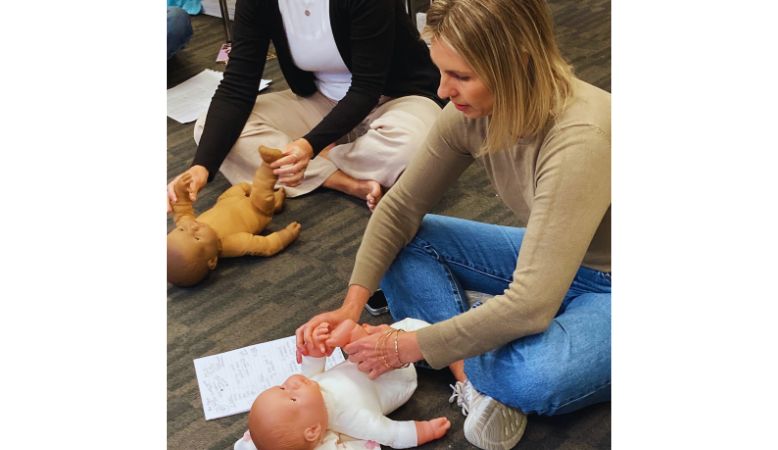
Throughout the Brisbane training, students worked with demonstration dolls to learn and practise a full-body massage sequence, including appropriate positioning, pressure, pacing and safe technique demonstration.
Using dolls also reflects an important principle of IMIS training. Infant massage instructors demonstrate techniques for parents, who then massage their own babies.
Rather than teaching a routine that must be completed in a particular way, instructors learn to help parents use massage flexibly, recognising and responding to their baby's individual cues and preferences.
Putting Teaching Skills into Practice
As the course progressed, students moved from learning and practising massage techniques to applying their knowledge in practical teaching activities.
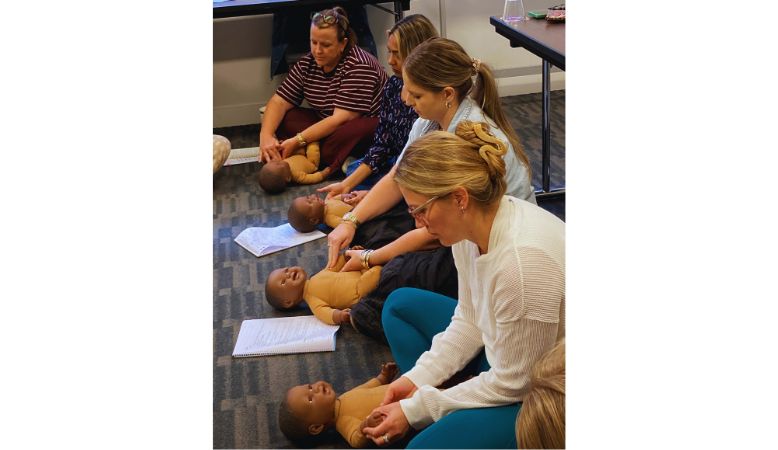
These sessions provided opportunities to explain techniques, introduce relevant information, respond to questions and explore how an infant massage session might unfold in different circumstances.
Through roleplay and practical demonstrations, students developed their ability to communicate infant massage principles and guide parents through the techniques.
For students with existing experience in parent education or family support, these activities offered an opportunity to apply familiar communication and facilitation skills within a new specialist context.
Paula reported that the group's practice teaching activities were a particular highlight. Students brought enthusiasm and effort to their presentations, drawing on their training and additional information from the manual to support their explanations.
By the final day, students were bringing their learning together in their introductory teaching assessments, demonstrating their understanding of infant massage and their ability to facilitate a session.
Developing Confidence Through Practical Experience
Knowing how to perform a massage technique and being able to teach it clearly are two different skills.
That's why practical teaching is such an important part of IMIS training.
Throughout the course, students have opportunities to practise demonstrations, explain techniques, ask questions and receive guidance and feedback.
They also learn how to adapt their teaching to different situations, including when a baby may need a break, when a parent has questions or when the planned sequence needs to change.
The emphasis is on accurate technique demonstration, sound professional judgement and responsive facilitation rather than memorising a script or delivering a rigid routine.
These are skills that can be incorporated into an existing professional role or used to establish a new infant massage education service.
What Did Students Think of the Brisbane Course?
Feedback following the October training reflected the different experiences, professional backgrounds and goals students brought to the course.
For occupational therapist Simone Sant, the practical activities and opportunities to repeat massage techniques were particularly valuable.
I enjoyed the practical component of this and the repetition of the massage tasks, it assisted me to feel more confident to use this. The resources are exceptional.
Simone also plans to incorporate her new infant massage skills into the services she already provides to infants and families.
Kerrie Webb, a remedial massage therapist, identified one of her key takeaways as gaining:
Confidence in teaching parents how to massage their babies.
Other graduates shared their experiences through public Google reviews.
Samantha Cridland, who travelled from New South Wales to attend the Brisbane course, described Paula as welcoming and knowledgeable. She also commented on the thoroughness of the training and said she felt equipped to begin offering classes for parents and their infants.
Yvonne Kelly described the course as intensive but valuable, recognising the care and support provided throughout the training.
Rebekah Pozzoli reflected on the opportunity to learn new skills and connect with other women in a welcoming learning environment.
Together, these reflections highlight different aspects of the training experience, from developing specialist skills and confidence in teaching parents to sharing knowledge and building connections with fellow students.
Completing the Course and Looking Ahead
The Brisbane students completed their core Certified Infant Massage Instructor (CIMI) training and assessments during the three-day course.
The CIMI qualification prepares graduates to teach parents how to massage their babies through individual appointments, parent groups and structured baby massage classes.
Graduates may choose to establish their own infant massage education service or incorporate these skills into existing work in health, allied health, early childhood education or family support.
IMIS also offers the Paediatric Massage Consultant (PMC) qualification for students who meet the relevant professional prerequisites.
Both qualification pathways share the same three-day training. Eligible students working towards PMC complete one additional assessment after the course, preparing them to deliver theory-based educational presentations to professional groups on infant and paediatric massage.
The PMC pathway builds on existing professional knowledge and experience, with a focus on communicating research and evidence-informed information rather than teaching massage techniques to other professionals.
Whichever pathway students choose, IMIS provides ongoing resources and professional support as graduates begin incorporating their new skills into practice.
Congratulations to Our Brisbane Graduates
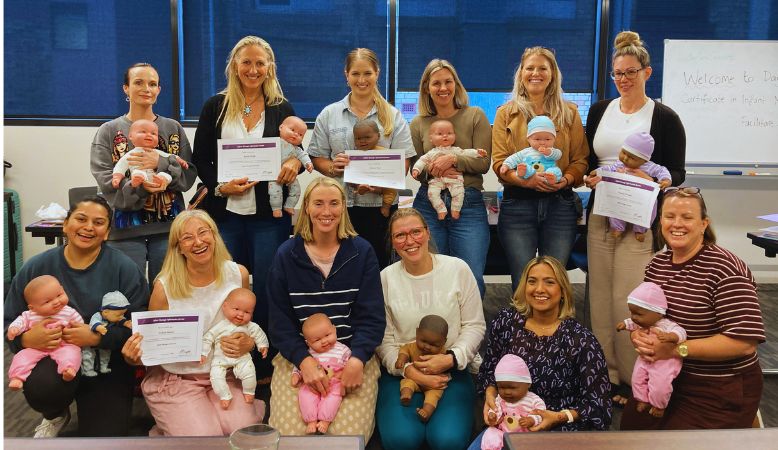
Congratulations to everyone who completed the IMIS infant massage instructor training in Brisbane in October 2026.
Thank you for the enthusiasm, experiences and perspectives you brought to the course, and for the encouragement and support you offered one another throughout the three days.
A special thank you also goes to Paula Hill for guiding the group through their practical learning and assessments.
We wish all our Brisbane graduates every success as they take their new knowledge and skills into their work with parents and families.
Interested in Becoming an Infant Massage Instructor?
If you've been considering professional infant massage training, we hope this glimpse inside our Brisbane course has given you a clearer picture of what to expect.
IMIS offers three-day face-to-face infant massage instructor training in Brisbane and other Australian locations, with both CIMI and PMC qualification pathways available.
Whether you're looking to introduce infant massage education into your existing professional work or explore a new direction, you can find information about upcoming course dates, qualification options, fees and enrolment on our
Brisbane Infant Massage Instructor Course page.
Self-paced online training is also available for those who prefer to study from home.